

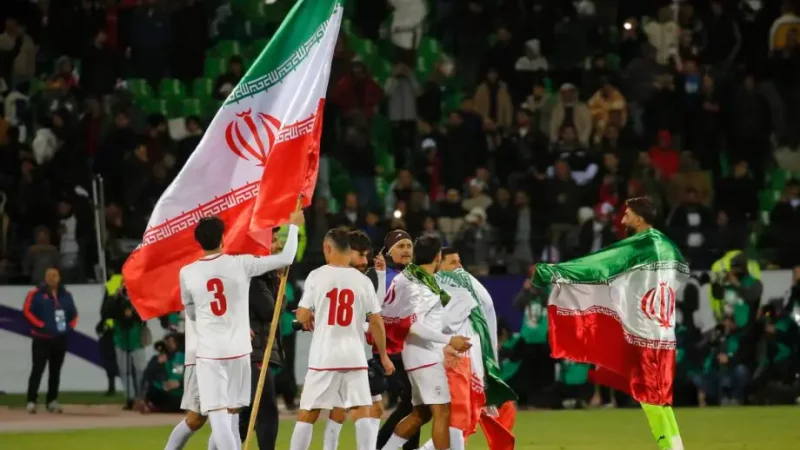
The Iranian Football Federation (FFIRI) has confirmed its decision to boycott the upcoming FIFA World Cup 2026 final draw in Washington, D.C., citing restrictive U.S. visa policies that prevented several key delegation members from traveling. The announcement, made on Friday, underscores ongoing geopolitical tensions between Tehran and Washington, which the federation described as unrelated to sports.
The draw, scheduled for December 5 at the John F. Kennedy Center for the Performing Arts, will determine group assignments for the expanded 48-team tournament co-hosted by the United States, Canada, and Mexico. Iran's absence marks a symbolic protest against what officials called discriminatory entry requirements, amid long-standing U.S. sanctions and security protocols affecting Iranian nationals.
FFIRI spokesperson Amir Mehdi Alavi stated on state television: "We have informed FIFA that the decisions taken have nothing to do with sports, and the members of the Iranian delegation will not participate in the World Cup draw." According to reports from Iranian sports outlet Varzesh 3, the U.S. authorities approved visas for only four individuals, including national team head coach Amir Ghalenoei, but denied entry to federation president Mehdi Taj and other senior officials.
This development follows Iran's qualification for the 2026 tournament in March, securing their seventh overall appearance and fourth consecutive berth. Historically, Iran has yet to advance beyond the group stage but holds a notable 2-1 victory over the U.S. from the 1998 World Cup in France—a result reversed by a 1-0 American win in their 2022 Qatar encounter.
The visa row emerges against a backdrop of strained U.S.-Iran relations, exacerbated by decades of political friction, including failed nuclear negotiations that collapsed in June amid an Israeli-led military campaign against Iran, with brief U.S. involvement. The U.S. maintains stringent visa restrictions on Iranians for national security reasons, a policy that persists despite recent efforts to streamline processing for World Cup visitors, including an expedited system announced by the Trump administration last week.
FIFA has not yet commented on the boycott, though the organization emphasized earlier this month that the event aims to unite global football stakeholders. Iran's decision highlights broader challenges for international sports amid diplomatic hurdles, potentially affecting the tournament's optics as it prepares to welcome participants from over 200 nations.
As preparations continue, the FFIRI has reiterated its commitment to the competition itself, with Ghalenoei focusing on team readiness for the summer 2026 finals. The boycott, however, serves as a stark reminder of how off-field politics can intersect with the world's most-watched sporting event.


No comments:
Post a Comment